5 Proven Strategies for Webflow Programmatic SEO in 2026
Discover how Webflow programmatic SEO automates content optimization, helping online businesses and digital marketers scale effectively.
SEO Automation, Webflow, Digital Marketing, AI-driven SEO, Content Optimization
Understanding Programmatic SEO
Programmatic SEO is a method that automates the process of optimizing web content for search engines. It leverages algorithms and large datasets to make data-driven decisions on keyword targeting, content creation, and optimization. This is increasingly crucial as the digital landscape becomes more competitive.
Definition and Importance of Programmatic SEO
At its core, programmatic SEO goes beyond traditional practices. It utilizes technology to generate high volumes of optimized landing pages or content that are tailored to specific keywords and user intent. This approach is essential in 2026, as search engines evolve and prioritize relevance and user experience.
The importance of programmatic SEO lies in its ability to:
Automate labor-intensive tasks: Reducing manual effort allows marketers to focus on strategic initiatives.
Enhance scalability: Businesses can rapidly expand their digital presence by creating numerous optimized pages efficiently.
Facilitate data-driven decision-making: Programmatic SEO uses analytics to refine tactics continuously, according to No-code Programmatic SEO with Webflow.
How Programmatic SEO Differs from Traditional SEO
Traditional SEO typically requires manual keyword research, content optimization, and ongoing adjustments based on performance metrics. In contrast, programmatic SEO operates on a larger scale by automating these processes.
Key differences include:
Efficiency: Traditional SEO can be time-consuming, while programmatic methods save time and resources.
Volume: Programs can create thousands of targeted pages in minutes, unlike the slower manual processes.
Real-Time Adaptation: Automated systems can swiftly respond to changes in search algorithms and user behavior.
For digital marketers, this shift means achieving faster results with less effort, critically addressing issues of workload and inefficiency.
Advantages of Using Programmatic SEO for Businesses
Businesses that adopt programmatic SEO can expect several advantages:
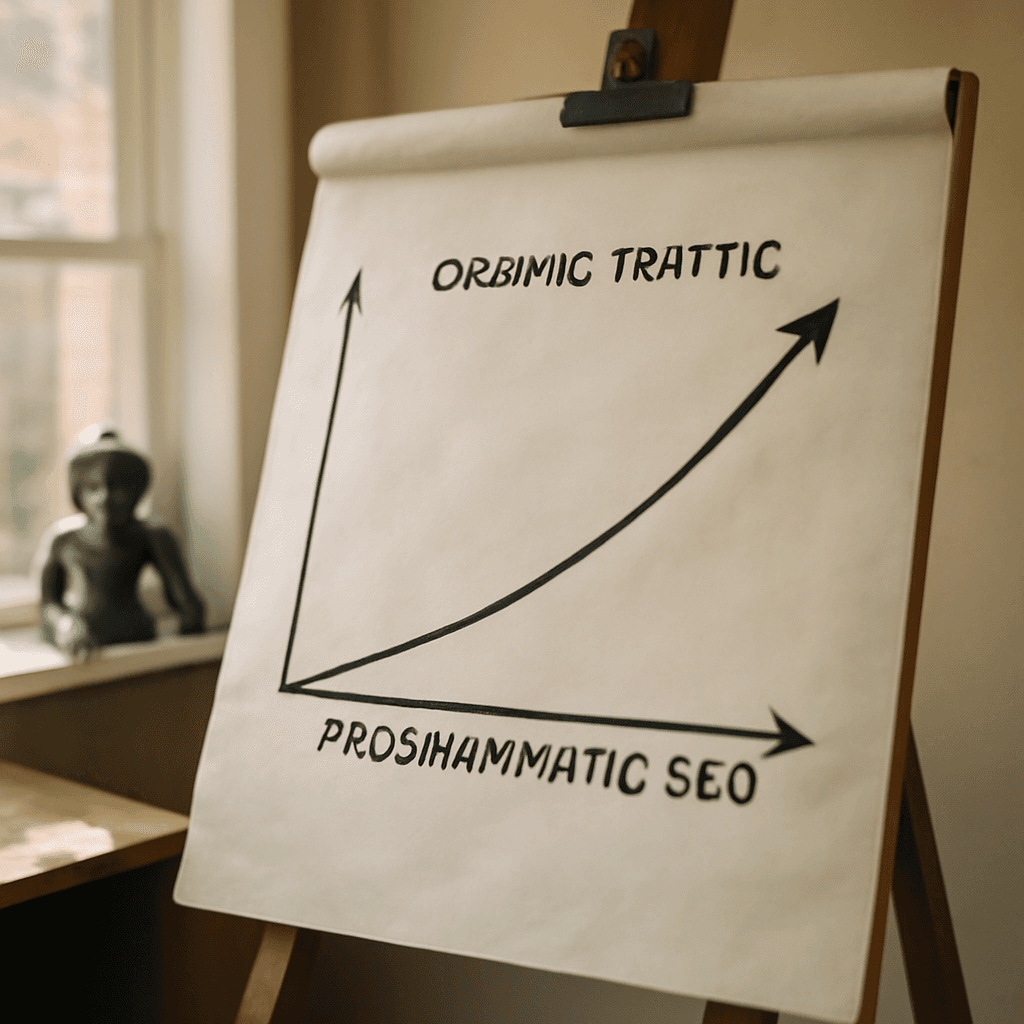
Increased Traffic: By targeting a broader range of keywords, companies can capture diverse search queries and boost organic traffic.
24/7 Optimization: A programmatic approach acts as a perpetual agent for your SEO needs, continuously enhancing content and performance even outside regular hours, as discussed in this Ultimate Guide To No code Programmatic SEO.
Cost-Effectiveness: Automating SEO tasks allows for resource reallocation, which can lead to lower operational costs.
"Programmatic SEO transforms how businesses approach their online presence, making it possible to compete at scale."
Integrating programmatic SEO into your marketing strategy not only streamlines efforts but can also significantly enhance ROI.
Essential Features of Webflow for Programmatic SEO
Dynamic Content Generation in Webflow
Webflow excels at dynamic content generation, making it a prime choice for programmatic SEO. The system enables users to create custom collections and templates, automating content creation.
CMS Collections: You can organize content types, allowing for an efficient flow of information.
Dynamic Pages: Automatically generate SEO-friendly pages for every item in your collections.
Personalization: Utilize data to deliver tailored content experiences based on user behavior.
This automation relieves your team from manual updates, ensuring your site remains fresh and relevant.

Customizable URL Structures for SEO
Webflow offers customizable URL structures, a crucial feature for enhancing your SEO strategy. Tailoring your URLs can significantly improve click-through rates and overall search visibility.
Clean URLs: Easily create user-friendly, descriptive URLs that reflect page content.
Keyword Integration: Strategically integrate primary keywords into your URLs for better rankings.
Dynamic Parameters: Use dynamic URL parameters to add unique identifiers that improve indexing.
Such customizable structures ensure search engines and users alike can navigate your content effortlessly.
Integration with Third-Party Tools and APIs
The ability to integrate with various third-party tools and APIs is another strong advantage of Webflow. This feature supports deeper SEO functionalities and advanced marketing strategies.
Analytics Tools: Connect with Google Analytics and other platforms to track site performance effectively.
Marketing Automation: Utilize tools like HubSpot for seamless lead generation and nurturing.
SEO Plugins: Integrate specialized SEO services to enhance keyword research and backlink analysis.
These integrations streamline your marketing processes, allowing you to focus on strategy rather than manual tasks.
Programmatic SEO can transform your approach to organic traffic, and Webflow’s robust features make it an ideal partner in this effort. By leveraging automation, customization, and integration, businesses can substantially improve their online presence with less effort.
Steps to Implement Programmatic SEO in Webflow
Identifying the right keywords is crucial for effective programmatic SEO. The goal is to select terms that not only represent your business but also have substantial search volume and manageable competition. Follow these steps:
Use Keyword Research Tools: Employ advanced tools like Ahrefs, SEMrush, or Google Keyword Planner. Focus on long-tail keywords that align with user intent.
Analyze Competitors: Identify keywords your competitors rank for, especially those that bring significant traffic. This provides insights into potential gaps you can exploit.
Create a Comprehensive List: Organize keywords into categories that relate to your content structure. This ensures a systematic approach when creating content.
Prioritize Your List: Focus on keywords that are achievable based on your domain authority and current performance. This enables a more sustainable growth trajectory.
Validate and Refine: Regularly revisit your keywords to adjust based on changing trends and analytics. This ensures your content remains relevant and competitive.
Creating and Managing Dynamic Collections
Webflow’s dynamic collections feature allows you to build content libraries efficiently. Here’s how to leverage it for programmatic SEO:
Create Collections: Start by defining the structure of your collections. These can represent products, blog posts, or services, tailored to your keyword strategy.
Use Custom Fields: Add relevant fields that will enhance your SEO, such as meta descriptions, tags, and images. This boosts your pages' visibility on search engines.
Automate Content Updates: Utilize Webflow’s integration capabilities to pull in data from external sources, ensuring that your collections are always up-to-date with the latest information or offerings.
Link Collections to Templates: Design templates that dynamically pull data from your collections, allowing for the rapid generation of optimized pages.

Leveraging Webflow CMS for Page Automation
Webflow's CMS capabilities offer a powerful way to automate page generation and optimize for search engines. To maximize its benefits:
Utilize Collection Pages: Each collection can automatically generate pages based on the template you set. This scalability is vital for programmatic SEO.
Incorporate Rich Media: Using images, videos, and interactive elements on your CMS pages enhances user engagement and boosts SEO rankings.
Set Up SEO Automation: Use Webflow’s built-in tools to automatically fill in meta tags, alt texts, and other SEO-related metadata across your generated pages. This consistency helps search engines understand your content better.
Track Metrics: Regularly analyze the performance of your automated pages. Use this data to iterate on your strategy and improve organic traffic further.
By combining keyword identification, dynamic collections, and the CMS features of Webflow, you can effectively implement programmatic SEO to enhance your online presence. This approach not only saves time but also significantly increases the potential for organic traffic growth. VibeSEO can complement these efforts, offering advanced tools for automating and optimizing your SEO processes.
Comparing Programmatic SEO Tools: Webflow vs. Competitors
Webflow offers unique capabilities in the realm of programmatic SEO, but how does it stack up against its competitors? Let's analyze the fundamentals of automation, usability, keyword optimization, and content structure.
Automation and Usability: Webflow vs. Rank Pill
Webflow shines in its intuitive user interface, allowing users to design responsive websites without extensive coding knowledge. Its programmatic SEO features streamline the automation process, catering to a range of businesses.
In contrast, Rank Pill provides robust automation features focusing on real-time data insights. Businesses that require immediate feedback on their SEO performance may find Rank Pill's capabilities more favorable.
Automation Features:
Webflow: Dynamic content generation and seamless editing.
Rank Pill: Real-time keyword tracking and on-page suggestions.
Ultimately, businesses need to consider their specific requirements. For users prioritizing ease of design, Webflow is an excellent choice. Those seeking detailed automation metrics may find greater value in Rank Pill’s offerings.
Keyword Optimization: SEO Bot AI vs. Webflow
When it comes to keyword optimization, SEO Bot AI utilizes advanced machine learning algorithms to analyze search trends and uncover valuable long-tail keywords. This level of analysis can be particularly useful for digital marketers looking to capitalize on niche markets.
Webflow, while powerful in its own right, often relies on user inputs for keyword targeting. For users who lack expertise, this can be a challenge. Webflow's built-in SEO features, however, allow for meta tag adjustments and alt text modifications, making it accessible.
Shortcomings:
Webflow: Requires external insights for optimal keyword selection.
SEO Bot AI: Offers deep learning capabilities for keyword analysis.
The decision between these tools will depend on whether marketers prefer a more hands-off keyword optimization workflow or a hands-on approach offered by Webflow.
Content Structure: Outrank vs. Webflow
Outrank focuses on creating detailed content structures that improve navigation and user engagement. Its algorithms analyze top-performing content to offer recommendations that enhance the structural integrity of web pages.
Webflow provides flexibility in content organization through collections and custom templates. Marketers can create rich content layouts tailored to their specific needs. However, maximizing content structure might require additional effort compared to Outrank's automated suggestions.
Content Structuring Capabilities:
Webflow: Offers flexibility in design and layout.
Outrank: Provides data-driven structuring recommendations.
For those who prefer customization, Webflow is advantageous. Yet, for marketers aiming for built-in structural optimization, Outrank's approach can save significant time.
Navigating the landscape of programmatic SEO tools requires thoughtful consideration of each platform’s strengths. With options like Webflow, Rank Pill, SEO Bot AI, and Outrank, businesses can select solutions that align with their unique SEO goals.
Enhancing Your Webflow Programmatic SEO with VibeSEO
Automating Keyword Research for Efficient Content Outlining
Keyword research is at the heart of SEO success. With VibeSEO, you can automate this crucial task, saving time and ensuring you focus on content that drives results. By leveraging AI-driven insights, VibeSEO identifies keywords that align with your business goals and market trends.
Automated keyword suggestions can be tailored to your audience's search intent, giving you a competitive edge. You'll spend less time manually sifting through data and more time creating compelling content that connects with your target market.
Technical Audits Made Easy with VibeSEO
Technical SEO audits can be daunting, but VibeSEO simplifies the process. It automatically scans your Webflow site for technical issues, providing actionable insights to improve performance.
With just a few clicks, you can discover:
Broken links
Missing meta tags
Site speed issues
This efficiency not only saves time but also ensures your site is optimized for search engines, enhancing your overall visibility.
"A well-rounded technical audit can boost your rankings significantly."
By addressing technical issues promptly, you can maintain a healthy website, pivotal for sustaining organic traffic growth.
How VibeSEO Can Boost Your Organic Traffic Efforts
Organic traffic remains a vital component of online business success. VibeSEO enhances your strategies through automated SEO tasks that maximize visibility. From on-page optimizations to consistent performance tracking, it operates as your 24/7 marketing agent.
Some key benefits include:
Continuous keyword rank tracking
Automated content recommendations based on emerging trends
Detailed performance reporting allowing for rapid adjustments
Your team can focus on strategic initiatives while VibeSEO handles the routine tasks, ensuring you see a steady increase in organic traffic.
By integrating VibeSEO with your Webflow setup, you're not just keeping pace with SEO demands; you're setting the stage for long-term success in a competitive landscape. This proactive approach lets you confidently target and capture valuable traffic, transforming your online presence.
Measuring Success: Metrics to Track Programmatic SEO Performance
Key Performance Indicators for Programmatic SEO
To measure the performance of your programmatic SEO efforts, focusing on Key Performance Indicators (KPIs) is essential. Here are several crucial metrics to track:
Organic Traffic: Measure the volume of visitors arriving via search engines. Increased organic traffic indicates successful keyword targeting and content optimization.
Conversion Rate: Evaluate the percentage of visitors completing desired actions, like signing up for newsletters or making purchases. A higher conversion rate signifies effective SEO tactics.
Keyword Rankings: Track how your targeted keywords perform over time. Consistent improvements in rankings can reflect the effectiveness of your programmatic strategies.
Bounce Rate: Analyze the percentage of visitors who leave after viewing only one page. A lower bounce rate suggests engaging content that keeps users interested.
Click-Through Rate (CTR): The ratio of users who click on your website from search engine results. A high CTR indicates that your titles and meta descriptions resonate with your audience.
Tools for Monitoring SEO Metrics in Webflow
Webflow offers a range of tools to analyze your SEO performance effectively. Utilize the following tools to monitor critical metrics:
Google Analytics: Integrate Google Analytics with Webflow to track user behavior, traffic sources, and conversion metrics.
Google Search Console: Access insights on keyword performance, indexing status, and website health. This tool is essential for identifying areas needing improvement.
Rank Math: A plugin that provides visibility into SEO performance directly within your Webflow dashboard, helping you optimize on-page elements efficiently.
Ahrefs or SEMrush: Use these robust tools for deeper analysis of backlinks, keyword rankings, and competitive insights that inform your SEO strategy.
Adjusting Strategies Based on Performance Data
Regularly monitoring and analyzing your SEO metrics allows you to adjust strategies for optimal results. Here’s how to effectively iterate based on performance data:
Review Data Regularly: Analyze your KPIs weekly or monthly to spot trends and anomalies. Continuous monitoring helps you stay ahead of shifts in user behavior.
A/B Testing: Experiment with different titles, meta descriptions, or content formats to see what yields better engagement. Implement changes based on performance outcomes.
Prioritize High-Performing Content: Identify content that drives traffic and conversions. Optimize it further while ensuring that it remains relevant and up-to-date.
Reassess Keywords: If certain keywords aren't performing, consider revisiting your keyword strategy. Use tools like VibeSEO to uncover new opportunities that may align more closely with user intent.
"Success in programmatic SEO lies in a continuous cycle of measurement and adjustment to maintain competitive advantage."
By regularly tracking these metrics and leveraging the right tools, online businesses can improve their SEO strategies with more precision. Remember, the insights gleaned from performance data serve as a compass guiding your marketing efforts forward.
Future Trends in Programmatic SEO and Webflow
Emerging technologies are transforming the landscape of SEO automation. Key advancements like artificial intelligence, machine learning, and big data analytics are helping digital marketers optimize their tactics and enhance efficiency, particularly in programmatic SEO strategies.
Emerging Technologies Impacting SEO Automation
AI-Driven Algorithms: Algorithms increasingly utilize AI to decipher user intent, enabling personalized and relevant search results.
Natural Language Processing (NLP): This technology allows search engines to better understand context and semantics, enhancing content relevance.
Automated Analytics Tools: Solutions like VibeSEO facilitate real-time data processing, enabling marketers to adapt strategies based on user interaction trends.
Predicting the Evolution of Programmatic SEO
Programmatic SEO is on the brink of significant evolution. As the online landscape grows more competitive, businesses will rely on automation not just for efficiency but also for predictive analytics.
Increased Data Use: Growth in available data will lead to finer segmentation and audience targeting, demanding an agile approach to keyword strategy.
Integration of Voice Search: As voice search becomes more prevalent, SEO strategies will need to adapt to conversational queries, altering keyword selection processes.
Sustainability Focus: Brands will increasingly be scrutinized for their environmental and social impact, influencing how SEO strategies align with sustainability messaging.
Preparing Your Strategy for Future SEO Changes
To stay ahead, businesses must be proactive in their SEO approaches. Here are some steps to prepare for the evolving landscape:
Invest in Automation Tools: Leverage technologies like VibeSEO to streamline SEO tasks, focusing on strategic rather than manual processes.
Continuous Learning: Keep abreast of SEO trends through regular training and industry updates to refine your strategies constantly.
Adopt a Holistic SEO Framework: Integrating SEO across all marketing channels will provide a comprehensive view of user engagement and consumer behavior.
"The future of SEO lies in automation and personalization; adapting to these shifts is essential for digital success."
At this juncture, employing AI-driven software becomes crucial in maintaining an edge over competitors. As programmatic SEO continues to evolve, businesses that embrace these changes will likely see improvements in organic traffic and user engagement, ultimately leading to higher conversions.